
Welcome!
Make yourself comfortable. Make yourself at home.
We, the editors of this sixth edition of the Arts and Science Review, cordially invite you to enjoy the following selections, among the best works written in Liberal Studies classes at OCAD University during the academic year of 2024-25.
This edition is comprised of a diverse array of subjects and forms. Some entries will invite you to imagine other worlds, others will invite you to experience ancient pathways, long buried under city pavements. We’ve included work from courses dedicated to the study of anthropology, art history, classics, creative writing, literature, philosophy...there is something here for everyone. We welcome you to turn the digital page, or click the link, to read an essay, a story, or watch a well-reasoned argument unfold before you. Most of all, we invite you to enjoy this sixth edition of the Arts and Science Review.
The video essay The Grandmaster of Demonic Cultivation: A Queer Reading by Serina Chan invites us to see Mo Dao Zu Shi (MDZS) not only as a beloved danmei romance, but as a story of queerness, of cultural identity, and of art itself. According to Chan, MDZS is a story about survival—of love, of identity, and of cultural meaning in the face of repression. Through the bond of Wei Wuxian and Lan Wangji, the narrative traces a world where love resists erasure, where tradition and desire coexist in quiet defiance, and where the unsaid becomes its own language of endurance.
Where Chan’s argument is especially resonant is in their exploration of diasporic reception—the ways MDZS has allowed queer Chinese and Chinese-diasporic audiences to navigate the fractures of cultural inheritance. Drawing on queer theory and media scholarship, Chan explores how MDZS re-signifies cultural heritage within a queer framework, transforming censorship into creativity, and fandom into kinship.
Join us in this exploration of art as survival, of queerness as continuity, of storytelling as a return.
In Burnt Tongue, you are lured into a space of intimate translation: between art and memory, warmth and shame, silence and sound. It is a story that moves from the small domestic rituals of family to the vast historical tides of revolution and exile, and back again to a quiet apartment in North York, where the past hums faintly through a cassette tape. You are invited into a story that begins not with words, but with gestures — a hand offering food, a blink of encouragement, a shared laugh between generations who do not share a language. Yet, this is not a simple fictionalized memoir; it is a meditation on the slow erosion and fragile persistence of culture. Our story ripples outward from the personal to the political. Grandmother’s silence is not merely linguistic; it carries the weight of the Chinese Cultural Revolution, when voices like hers — rural, artistic, Cantonese — were suppressed in the name of progress. The essay connects this historical violence to a contemporary, diasporic experience in Canada, where the same silencing continues in quieter, more private forms.
To read Burnt Tongue is to be invited into the work of listening — to the voices buried under history, to the sounds that survive migration, and to the untranslatable warmth that persists between generations. It asks us to consider what it means to lose a language and to find it again through art.
In her story “The Salt of War” Tara Kliska invites us to consider the ancient tales of the Trojan War and its aftermath from the perspective of a woman — Andromache. In Homer’s Illiad she appears as the wife of Hector, who, after Hector’s death in battle, tragically becomes the concubine of the man who kills her infant son. In Homer, Euripides and Virgil, she appears as a passive and submissive character, revered for both her enduring fidelity to her first husband, and her forbearance throughout a life of servitude, victimization and homelessness. Traditionally, she epitomizes the pain and suffering of the Trojan women. However, in Kliska’s story we find a woman who “fought against her bleak fate”—a woman worthy of her name: fighter of men.
Jordyn Hendricks invites us into an intimate one-way correspondence with the late cultural theorists and critic bell hooks. Hendricks expresses gratitude to hooks for clearly articulating something that they have previously felt intuitively but had not been able to capture in language: the need to challenge reductive essentialist identity formations, especially within marginalized groups. hooks invites her readers to imagine a form of representation that can account for the diversity of experience and identity within the racialized category of Blackness. As an Indigenous artist, Hendricks draws upon hooks’ essay “An Aesthetic of Blackness: Strange and Oppositional” to consider how “neoliberal identitarianism” limits each of us to “one or two identity categories.” Hendricks closes their letter to hooks by stating that both Black and Indigenous artists share a common challenge and opportunity to “build trust within themselves to vulnerably reflect the fullness of their experience.”
Hendrick’s call to reflect on the fullness of experience becomes especially pertinent when we confront media representations that reduce the nuance of identities to binary stereotypes shaped by white supremacy and the intersections of race, class, and gender. Both Christina Da Graca’s and Zöe Braga’s essays invite us to look closely at how deeply embedded these stereotypes are and how they are manipulated and disguised as entertainment.
Both essays call for a re-examination of cultural productions that normalize the objectification of racialized and gendered bodies across social media platforms and popular films. Zoë Braga’s essay offers a rigorous analysis of ASMR (autonomous sensory meridian response) “deportation” videos popularized by the Trump administration’s White House social media accounts. The Republican use of accessible platforms to disseminate ASMR content strategically targets young audiences through an uncritical veneer of humour that disguises the violence beneath the surface, thereby deflecting critical scrutiny of anti-immigrant aggression in the United States. By foregrounding the sensory through the metallic sound of shackles on an immigrant’s body, for example, these videos aestheticize and obscure violence, dissociating sensation from personhood and perversely framing anti-immigrant brutality as consumable affect. New Media, in turn, transforms such representations into sleek sensory spectacles that promise entertainment at the expense of ethical and critical engagement, contributing to the desensitization of audiences. Braga ultimately links this digital allure of entertainment to the objectifying logic embedded within tourist practices, in which the dehumanization of marginalized populations is reconstituted as a form of spectacle and consumption.
Christina Da Graca’s contribution similarly calls for critical scrutiny of representations that construct Black female bodies as both suffering and disposable, particularly within popular science fiction film. Da Graca interrogates the taken-for-granted narratives of The Hunger Games (2012), Snowpiercer (2013), and Ex Machina (2014), revealing the extent to which Black female characters are marginalized and instrumentalized to advance the development of white protagonists. These representations do not exist solely on the screen; they parallel lived experience even when imagining the future of Blackness, as in ExMachina’s depiction of a Black AI female character whose literal objectification as non-human is normalized as Black and projected as an “inevitable part of the future”. Da Graca’s incisive analysis of these three films extends an invitation to non-black audiences to reflect on the cumulative harm of such depictions over time and to “imagine, truly imagine, what it feels like to see oneself repeatedly depicted in a genre that is meant to represent the future of humanity, yet only as helpless, disposable, and destined for suffering.” This call for self-reflection moves beyond cinematic representation to interrogate the misogynistic and racist conditions that render the suffering of Black women a necessary and acceptable narrative device.
In “The Queerverse: Finding Solace in Science Fiction”, Gus Lederman shares a story from their childhood in which they first discovered the Rocky Horror Picture Show. This moment at arts camp when the community came together to do the Time Warp dance, encapsulates Lederman’s celebration of science fiction as a space of refuge for queer universes. Considering the experiences of both queer readers and writers of sci-fi, this essay highlights a range of sci-fi media including Samuel R. Delany’s erotica, Lisa Tuttle’s and Joanna Russ’ subversion of cisheteronormative tropes, as well as Darcie Little Badger’s queer Indigenous futurist stories. Lederman evocatively weaves these worlds together by celebrating how science fiction “provides a refuge for the strange and otherworldly, allowing a space for those who feel they fit outside of the norm to imagine themselves in alternate universes.”
Alessandra Mercado’s ‘field guide’ uses photographs and text to map a portion of Russell Creek – one of Toronto’s many lost waterways. At once seeking the presence of the creek and showing gratitude for its existence, Mercado beckons the guide’s user to feel present. Inspired by Georges Perec’s Species of Spaces (1974), the city’s forgotten history is explored through attentive observation, and through the imaginary of memory. Two accounts of the same place are juxtaposed. One is characterized by a longing to connect with the creek, while the other is attuned to its remnants, however abstract: yellow hydrants, sewage grates, vegetation sprouting out of cracks. A particularly poignant map shows the day-to-day urban activities of people, animals and plant life as they move in proximity to the creek perhaps without being aware. These figures are outlined in yellow as if to highlight their intrusion. “Uncovering Russell Creek” is a summons to explore the hidden, and to look beyond the everyday and to take notice of the layers of the city that surrounds us.
If Mercado’s work uncovers what lies beneath a familiar landscape, then Maryam Akhlaghi’s essay turns our attention outward to artistic, cultural, and cosmological continuities across time and place. In Looking Through the Canamayte, Maryam Akhlaghi draws a compelling visual parallel between the contemporary painting Organic Consciousness by Mexican artist Javier López Pastrana and the pre-conquest Mexica hieroglyph of Ollin to explore the complexities of non-Western ontologies. Akhlaghi anchors her analysis in a discussion of Ollin—the symbolic embodiment of movement central to the Nahua concept of Tēotl—to suggest how Pastrana’s artwork expresses a universal, interconnected consciousness that resists Western dualism. Crucially, the author's analysis of Tēotl as a unifying generative force is shaped by her Iranian perspective and reflection on how Persian cosmologies, including Zoroastrianism, share with the Mexica worldview the expression of energy transitioning into form. Akhlaghi's multifaceted exploration of how the Indigenous ontology of Tēotl endures in modern Mexican artistic expression, and the parallels she draws with Persian cosmology, invites the reader to contemplate how creation and existence are understood across diverse global belief systems.
With appreciation to the Faculty of Arts and Science for supporting this year’s prize award, we are proud to recognize Alessandra Mercado, whose outstanding submission was selected by the editorial committee as this Issue’s award winner.
Editorial Committee for The Arts & Science Review
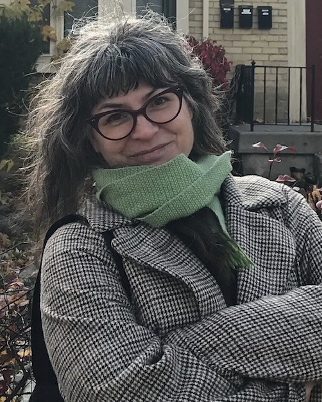
Kathy Kiloh
Dr. Kathy Kiloh teaches Humanities courses with an emphasis on philosophy and critical theory at OCAD University. Some of these classes include Uncanny Animals, Aesthetics, and The Philosophy of Love and Sex. Her research focuses on Frankfurt School Critical Theory and the ways in which it intersects with other critical discourses. She specializes in the philosophy of Theodor Adorno and is currently writing a book about how love appears in his work.

Maria Belén Ordóñez
Assistant Professor, Teaching Stream
Social Sciences
Faculty of Arts and Science and Graduate Studies
OCAD University
Dr. Maria Belén Ordóñez’ research includes ethnographically tracking affects in Canadian legislative challenges dealing with sex, sexuality, censorship, and morality. Ordóñez uses feminist/queer and multi-sited approaches to write about the emergence and impacts of public events related to sexuality and intimacy. Her current research explores anti-oedipal readings of parent-child relationships in legal, cultural, and cinematic forms. She teaches feminist and queer theories, multi-sited and experimental ethnography, alongside alter-pedagogies that intersect art, embodiment, and accessibility.
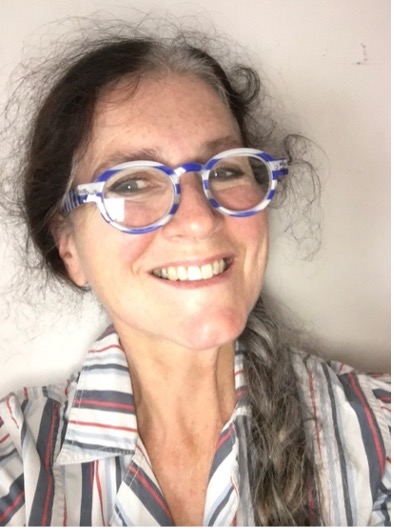
Barbara Rauch
Dr. Barbara Rauch is an Associate Professor at OCAD University where she is also the co-director of the Data Materialization Studio Lab involved in researching advanced technologies in 3D printing/sculpting and data analysis. At the Lab, they foster discourse around the topics of affect, emotion and feeling in art, craft and design practices. A recent SEED SSHRC grant considers models as sustainable practice to unpack speculative critical posthumanist theories. has investigated models becoming a way of pointing to decolonial and ethical futures.

Lori Riva
Lori Riva’s research activities, includes co-piloting a study, “Caring Futures in Canadian Art and Design Education” in which participants codesign a fictional future university organized with care as its central tenet. She is also co-developing PLaiSHOP, a toolkit that uses play to engage art and design educators in conversations about Generative AI and critical AI literacy. Lori’s research stems from her aspiration to motivate her students to think, act, and make with care.
Cover Photo: A Double Look at Russell Creek. Photographs of the laneway west of Beverley, south of Sullivan, Toronto by Alessandra Mercado, 2025. Mirrored composition by the editorial team.